
Planning transportation for a group sounds simple until you have to decide what vehicle you actually need.
You may know that 25, 40, or 50 people need transportation, but passenger count is only the beginning. Will everyone have luggage? Are you traveling to one destination or making several stops? Will passengers spend 20 minutes on the bus or several hours? Does the venue have enough space for a full-size motor coach? Are you picking people up from a hotel, airport, corporate office, or event venue?
These details can completely change which bus makes the most sense.
For groups traveling around Dallas, Fort Worth, and other parts of Texas, choosing the right vehicle can make the entire experience easier. The goal is not simply to find a bus large enough to fit everyone. The goal is to choose transportation that fits the passengers, schedule, route, luggage, destination, and overall travel experience.
At JC LIMO, group transportation is built around those practical details.
Here is what you should consider before choosing a bus or shuttle for your next Dallas–Fort Worth trip.
Start With Your Real Passenger Count
The first question is obvious: how many people are traveling?
But there is an important difference between an estimated guest list and a confirmed transportation count.
Suppose you are planning a corporate event for 45 employees. You may assume a bus with approximately 45 seats will be enough. Then, two managers join the trip at the last minute, an event coordinator needs transportation, and suddenly your original plan is too tight.
The same thing can happen with weddings, conferences, school events, church outings, sporting events, and private trips.
When arranging group transportation in Dallas, try to get the most accurate passenger count possible before selecting the vehicle.
It can also be smart to leave a small amount of flexibility when attendance may change.
A vehicle should comfortably accommodate your group rather than simply meeting the minimum number of seats required.
Think Beyond the Number of Seats
Passenger capacity is important, but comfort matters too.
Imagine two groups with exactly 30 passengers.
The first group needs transportation from a Dallas hotel to a nearby event venue.
The second group is traveling several hours across Texas with suitcases and personal belongings.
Both groups have the same number of passengers, but their transportation needs are very different.
For the first group, a smaller shuttle bus may provide exactly what is needed.
For the second, a larger vehicle with more luggage capacity and amenities could provide a much better experience.
Before booking, think about:
- Number of passengers
- Amount of luggage
- Length of the trip
- Number of stops
- Passenger comfort
- Venue access
- Pickup location
- Type of event
- Accessibility requirements
- Possibility of additional passengers
These factors help determine the right vehicle far more accurately than passenger count alone.
When a Mini Bus Makes Sense
For smaller and medium-sized groups, a mini bus can provide an efficient balance between capacity and convenience.
JC LIMO offers group transportation options designed for different passenger counts, including vehicles for groups of around 31 passengers.
A smaller bus can work particularly well when your group needs to move through busy areas of Dallas or Fort Worth, especially when pickup and drop-off locations have limited space.
Consider a mini bus for situations such as:
Corporate Team Transportation
A company may need to move employees from an office to a meeting, restaurant, hotel, conference, or team-building activity.
Instead of asking everyone to drive separately, a dedicated bus keeps the group together and simplifies arrival.
Wedding Parties
Not every wedding requires a 50-passenger motor coach.
For smaller wedding parties, family groups, bridesmaids and groomsmen, or hotel-to-venue transportation, a mini bus can be a practical option.
Private Group Outings
Birthdays, family events, dinners, entertainment trips, and other private outings often involve groups that are too large for several cars but do not require a full-size motor coach.
That is where smaller group shuttles become useful.
When a Larger Shuttle Bus Is Better
As the group becomes larger, coordinating several smaller vehicles can quickly become complicated.
One vehicle leaves late.
Another takes a different route.
Someone goes to the wrong entrance.
A passenger gets separated from the rest of the group.
Suddenly, what should have been a simple transportation plan becomes a series of phone calls.
A larger shuttle bus can reduce those problems by keeping more passengers together.
For groups in the 30-to-40-plus passenger range, this can be especially useful for:
- Conferences
- Weddings
- Corporate events
- Employee transportation
- School programs
- Church groups
- Concerts
- Sports events
- Hotel transfers
- Large private gatherings
Instead of coordinating several independent vehicles, planners can organize a central pickup point and move the group according to one schedule.
That structure becomes particularly valuable in the Dallas–Fort Worth Metroplex, where destinations may be spread across multiple cities.
When a 56-Passenger Motor Coach Makes Sense
For large groups, a motor coach is often the most practical transportation solution.
JC LIMO operates motor coaches with capacity for up to 56 passengers, providing groups with the ability to travel together rather than splitting across multiple vehicles.
A larger motor coach is particularly useful for conferences, conventions, airport transfers, weddings, trade shows, sporting events, corporate programs, and longer Texas trips.
There is also another factor: luggage.
A group of 50 people traveling from a hotel to a dinner may have almost no luggage.
A group of 50 people arriving at DFW International Airport could have 50 or more suitcases.
Those are completely different transportation requirements.
For airport transfers and longer journeys, luggage capacity should be considered alongside passenger capacity.
Consider How Long Your Group Will Be on the Road
Trip duration should influence your vehicle choice.
A short transfer from a hotel to an event venue is different from a full-day itinerary across Dallas and Fort Worth.
For longer journeys, passenger comfort becomes increasingly important.
People need enough room to settle in, especially if they will be traveling for several hours. Depending on the selected vehicle, features such as reclining seats, Wi-Fi, luggage storage, or an onboard restroom can make longer journeys more comfortable.
Think about the entire day rather than only the first trip.
Your schedule might include:
Hotel → conference
Conference → restaurant
Restaurant → entertainment venue
Venue → hotel
A vehicle that seems unnecessary for the first 15-minute transfer might make much more sense when you look at the complete itinerary.
Don’t Forget About Luggage
Luggage is one of the easiest transportation details to underestimate.
Airport groups are the clearest example.
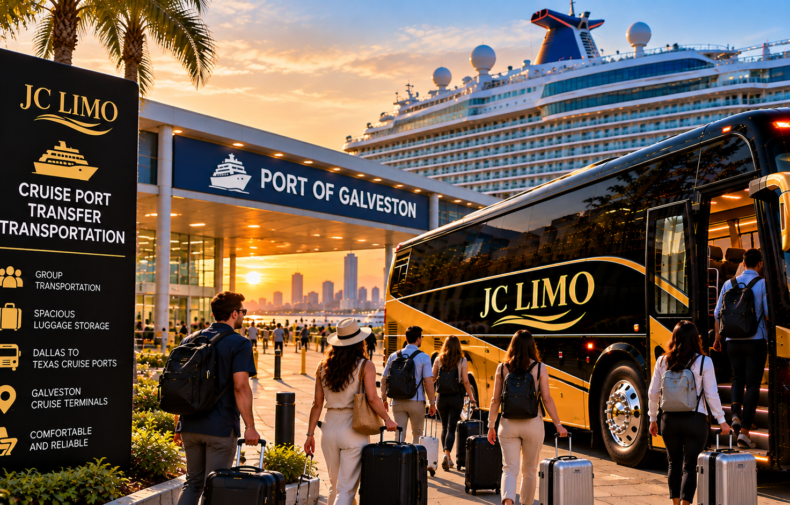
If 40 passengers are arriving in Dallas, Texas, you are not only transporting 40 people. You may also be transporting 40 large suitcases, carry-on bags, equipment, and personal belongings.
Corporate groups may have presentation materials.
Sports groups may have equipment.
Wedding parties may have dresses, decorations, gifts, or other items.
Tour groups may be carrying luggage for several days.
Tell your transportation provider what the group will be bringing before finalizing the bus.
Choosing a larger vehicle because of luggage can sometimes be more practical than selecting a smaller bus based purely on seating capacity.
Think About Where the Bus Needs to Go
Dallas–Fort Worth covers an enormous area.
A group itinerary might involve Dallas, Fort Worth, Arlington, Plano, Frisco, Irving, Grapevine, and several surrounding communities in a single day.
The right bus therefore needs to fit the route as well as the group.
Large motor coaches are excellent for high-capacity transportation, but certain locations may have tighter loading zones, restricted entrances, or limited maneuvering space.
Hotels, restaurants, private venues, office buildings, schools, and event spaces can all have different loading arrangements.
Providing addresses in advance gives your transportation team an opportunity to consider access before the day of travel.
That small planning step can prevent unnecessary delays.
One Large Bus or Multiple Smaller Shuttles?
Sometimes the biggest available bus is not automatically the best solution.
Imagine you have 80 guests.
One option might involve multiple large buses transporting everyone simultaneously.
Another might involve a shuttle system operating between a hotel and nearby venue.
Which is better?
It depends on the event.
If everyone must arrive at exactly the same time, moving the group together may be the priority.
If passengers are arriving gradually, continuous shuttle transportation may make more sense.
For weddings, for example, guests may need transportation before the ceremony and then several return options later in the evening.
For conferences, attendees might need recurring service between hotels and a convention venue.
For employees, a scheduled shuttle may operate repeatedly around shift times.
The question is not simply, “How many buses do we need?”
It is, “How should people move throughout the day?”
That distinction leads to a much better transportation plan.
Match the Bus to the Type of Group
Different passengers have different expectations.
A corporate executive team may prioritize timing and an organized professional experience.
Wedding guests may value convenient pickup locations and return transportation.
A church or community group may prioritize keeping everyone together.
Conference attendees may need repeated hotel-to-venue shuttles.
An airport group may require significant luggage capacity.
A sports group may need space for equipment.
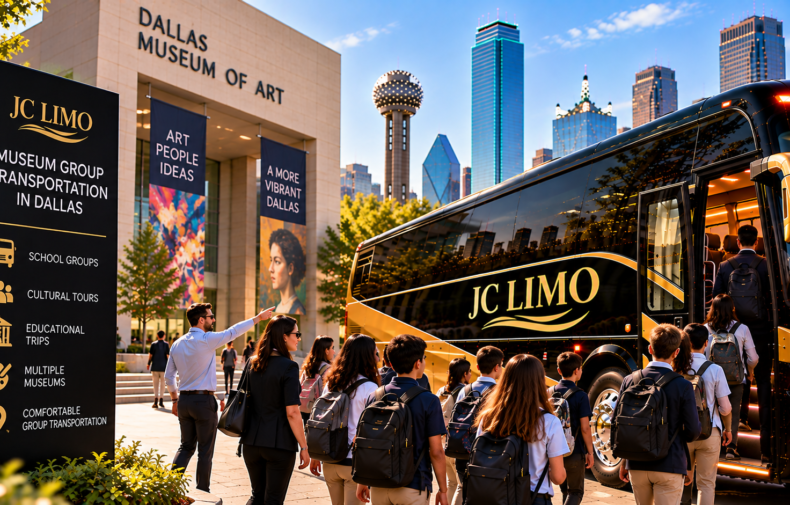
A group visiting the Fort Worth Stockyards may need transportation that fits a sightseeing itinerary with several scheduled stops.
Understanding who is traveling helps determine what matters most.
Why Group Transportation Beats a Collection of Cars
When planning transportation, it can be tempting to simply tell everyone to drive themselves.
For very small gatherings, that may work.
For larger groups, it often creates unnecessary variables.
People leave at different times.
Some get stuck in traffic.
Others struggle with parking.
Someone enters the wrong address.
Guests unfamiliar with Dallas or Fort Worth may take the wrong route.
The organizer then spends time answering calls and trying to locate missing passengers.
A dedicated bus or shuttle simplifies the process.
Instead of managing dozens of individual trips, you manage one coordinated transportation plan.
For events with strict schedules, that difference can be significant.
Plan for Dallas–Fort Worth Traffic
Anyone familiar with North Texas knows that distance on a map does not always tell you how long a trip will take.
Traffic conditions can vary significantly depending on the time of day, location, construction, major events, and other factors.
That is why realistic scheduling matters.
If your group has a 6:00 PM reservation in Fort Worth, planning transportation based solely on ideal driving time could leave very little room for unexpected delays.
Professional group transportation should account for the route and schedule rather than treating every journey like a simple point-to-point drive.
For multi-stop trips, this becomes even more important.
A delay at the first stop can affect every stop afterward.
Building a realistic schedule gives the group more breathing room.
Questions to Answer Before Booking
Before contacting JC LIMO about transportation, gather a few basic details.
Know your approximate passenger count, pickup location, destination, event date, desired pickup time, estimated return time, number of stops, luggage requirements, and any special circumstances.
You do not need to design the entire route yourself.
The purpose of collecting this information is to give the transportation team enough context to recommend an appropriate setup.
The more accurate the information, the easier it becomes to match the right vehicle to the trip.
The Right Transportation Makes Group Travel Feel Simple
Good group transportation is often invisible.
Passengers board the bus.
Everyone has a seat.
The group leaves together.
The route makes sense.
They arrive where they need to be.
Nobody thinks about the logistics behind it.
That is exactly the point.
Whether you are coordinating 25 employees, 40 wedding guests, 50 conference attendees, or an even larger group requiring multiple vehicles, choosing the right bus can remove one of the biggest logistical challenges from your day.
Across Dallas, Fort Worth, and surrounding Texas communities, JC LIMO provides transportation solutions for groups that need organized, dependable travel.
From smaller group shuttles to larger buses and motor coaches, the right choice depends on more than capacity. It depends on where you are going, who is traveling, what passengers are carrying, how long they will be on the road, and how the transportation fits into the overall schedule.
When those details are planned properly, group travel becomes much easier.
Instead of asking everyone to figure out transportation individually, your passengers can simply get on the bus and focus on the reason they are traveling in the first place.

Related posts
 13Oct, 26
Dallas Group Transportation With Luggage and Equipment
 13Oct, 26
Dallas Group Transportation With Multiple Drop-Offs
 13Oct, 26
- October 13, 2026
- 0
- 10
