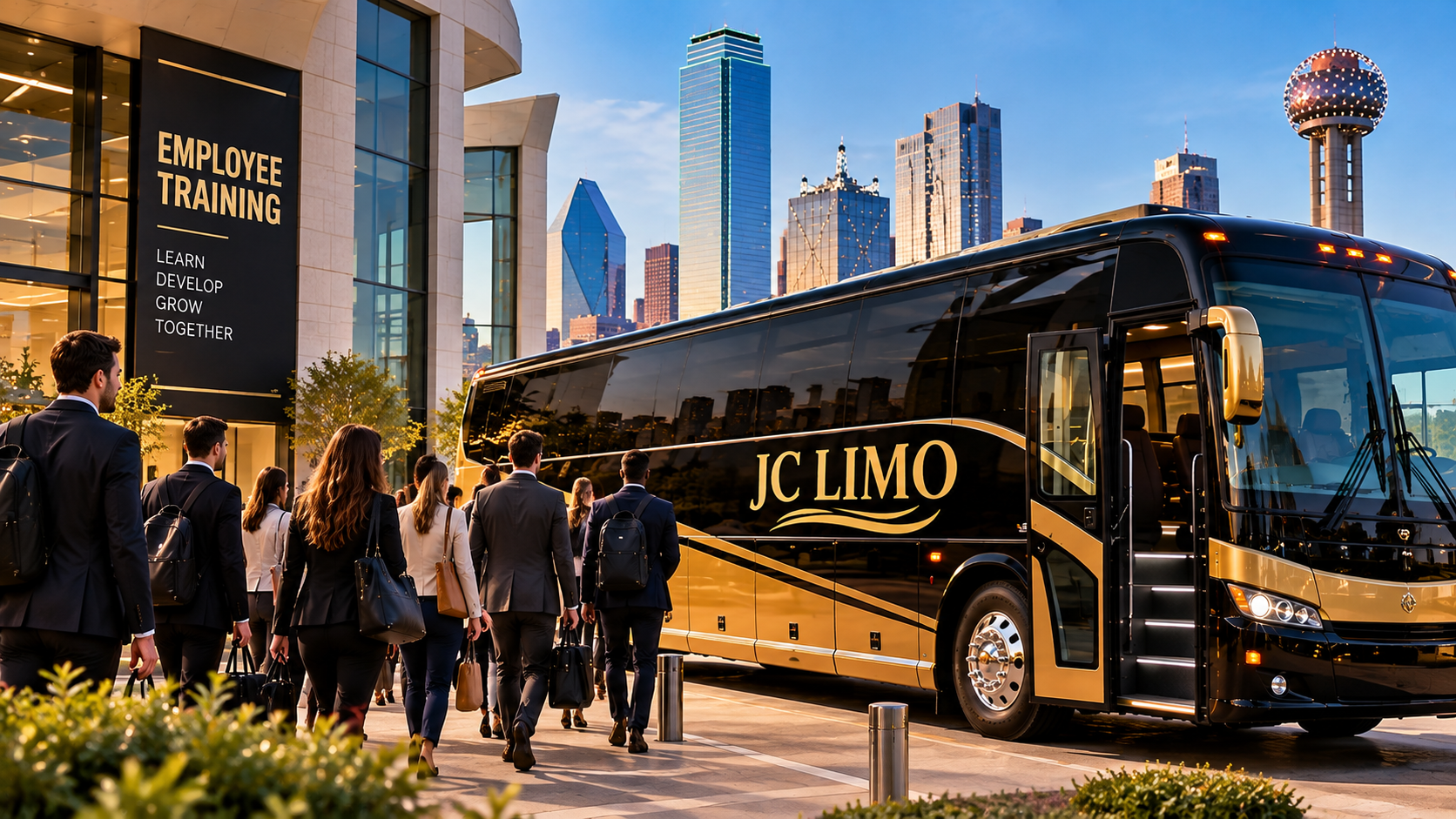
Dallas Employee Training Transportation: A Complete Guide
Employee training is an important investment for any business. Whether a company is introducing new technology, onboarding employees, updating safety procedures, or developing leadership skills, training programs help teams gain the knowledge they need to perform their jobs effectively.
However, organizing a successful training session involves more than preparing presentations and booking meeting rooms.
When employees need to attend training at a location outside their regular workplace, transportation becomes an important part of the planning process.
In a large metropolitan area like Dallas–Fort Worth, Texas, coordinating travel for groups of employees can quickly become complicated. Participants may work at different offices, live in different communities, or need to attend sessions at unfamiliar locations.
Some employees may arrive late because of traffic, while others struggle to find parking or locate the training facility.
These situations can disrupt the schedule and reduce the time available for learning.
That’s why businesses should consider Dallas employee training transportation as part of their overall training strategy.
With group transportation options from JC LIMO, companies can organize bus and shuttle services that support employee training programs throughout Dallas, Fort Worth, and surrounding North Texas communities.
Why Transportation Matters for Employee Training Programs
Companies often spend significant time and money developing employee training programs.
They hire instructors, prepare materials, reserve facilities, and schedule employees away from their normal responsibilities.
When transportation is not properly organized, these investments can be affected by avoidable delays.
Consider a company with employees working at several locations throughout Dallas.
The organization schedules a full-day training session at a central facility. Employees are expected to arrive by 8:30 AM, but everyone must arrange their own transportation.
Some employees leave early to avoid traffic. Others arrive late because of road congestion, parking problems, or confusion about the location.
The training coordinator now has to decide whether to delay the session or begin without everyone present.
Both options create challenges.
Organized group transportation can reduce these complications by establishing shared departure times and designated pickup locations.
Instead of relying on dozens of separate journeys, businesses can coordinate employee arrivals around the training schedule.
Different Types of Employee Training That Require Transportation
Not every employee training program takes place at the company’s regular office.
Many businesses organize specialized training at external facilities, making transportation an important consideration.
New Employee Onboarding Programs
Large organizations sometimes bring new employees together for centralized onboarding sessions.
These programs may include company introductions, HR presentations, workplace policies, and practical training.
When new employees are based at different offices, group transportation can help them reach the onboarding location together.
Shared transportation also gives new team members an opportunity to meet colleagues before the training begins.
Technical and Equipment Training
Manufacturing companies, construction businesses, healthcare organizations, and other industries may require employees to attend specialized technical training.
These sessions often take place at dedicated training centers or facilities equipped with specific machinery and equipment.
A company might need to transport employees from its regular workplace to a technical training center in another part of the Dallas–Fort Worth area.
Arranging a bus or shuttle can simplify this process.
Leadership Development Workshops
Leadership training programs frequently bring supervisors, managers, and department heads together.
These sessions may take place at hotels, conference facilities, or off-site meeting locations.
When participants are traveling from different company offices, coordinated transportation can help everyone arrive on schedule.
Safety and Compliance Training
Some organizations require employees to complete regular safety or compliance training.
These programs may involve large groups attending scheduled sessions throughout the year.
For businesses with multiple locations, transportation planning can support consistent attendance and reduce scheduling complications.
Planning Transportation Around Training Schedules
A successful transportation plan begins with a clear understanding of the training agenda.
Unlike recreational group travel, employee training transportation often involves strict arrival and departure requirements.
Instructors may have limited availability, training rooms may be reserved for specific hours, and employees may need to return to work afterward.
Transportation should be organized around these operational requirements.
Confirm the Training Start Time
The scheduled start time is not necessarily the time employees should arrive.
Participants may need to complete registration, collect training materials, find their seats, or prepare equipment before the session begins.
For example, if a training session starts at 9:00 AM, organizers might aim for employees to arrive 20 to 30 minutes earlier.
The exact buffer should reflect the event’s requirements.
Establish Pickup Locations
Businesses with employees working at several facilities should identify practical pickup points.
These might include company offices, distribution centers, employee parking areas, or designated meeting locations.
Using a limited number of clearly communicated pickup points can make the transportation schedule easier to manage.
However, organizers should also consider how employees will reach those locations.
Account for Dallas–Fort Worth Traffic
Traffic conditions can vary considerably across North Texas.
A journey between Dallas and Fort Worth may take longer during peak commuting hours than during quieter periods.
The same applies to routes connecting Plano, Frisco, Irving, Arlington, and other communities.
Transportation schedules should account for expected traffic rather than relying exclusively on ideal travel times.
Coordinate Return Transportation
Employee transportation planning should include the return journey.
Some training sessions finish at a fixed time, while others include practical exercises or assessments that may run longer.
Organizers should discuss these possibilities with their transportation provider when arranging service.
Choosing the Right Bus or Shuttle for Training Groups
Vehicle selection depends on several factors, including passenger numbers, travel distance, and the type of training being organized.
A company transporting 20 employees to a nearby training facility will have different requirements from an organization moving 50 participants across the Metroplex.
JC LIMO provides group transportation services with bus and shuttle options for corporate travel.
Mini Buses for Department Training
Mini buses can be useful for transporting smaller departments or training groups.
They allow employees to travel together without requiring multiple individual vehicles.
This option may be suitable for management workshops, technical training sessions, or departmental development programs.
Shuttle Buses for Recurring Training Sessions
Shuttle transportation can be especially practical when training programs take place over several days or weeks.
For example, a company might schedule a morning shuttle from its office to a training center and an afternoon return trip.
Using a consistent transportation schedule helps employees understand where they need to be and when.
Charter Buses for Larger Employee Groups
Larger training events may require a full-sized charter bus.
A charter bus can help businesses transport employees from one location to another as a coordinated group.
Before booking, companies should confirm the number of passengers, any accessibility requirements, and whether employees will be carrying luggage or training equipment.
Transportation for Employees Working at Multiple Locations
Many businesses in Dallas–Fort Worth operate from more than one facility.
A company may have its headquarters in Dallas, a warehouse in Fort Worth, and additional offices in Plano or Irving.
When employees from these locations need to attend the same training program, transportation coordination becomes more complex.
One approach is to establish separate pickup locations for different employee groups.
For example, employees from two nearby offices might meet at a central pickup point before traveling to the training facility.
Another approach is to organize multiple shuttle routes when passenger numbers and distances justify them.
The appropriate arrangement depends on the location of the training center, the number of employees, and the available transportation budget.
Companies should avoid creating unnecessarily complicated routes with too many stops.
Although collecting employees from every individual workplace might seem convenient, excessive pickups can significantly increase travel time.
A practical transportation plan balances convenience with efficiency.
How Employee Transportation Can Reduce Training Disruptions
Training programs work best when participants can focus on learning.
Employees who arrive late, struggle with parking, or spend excessive time navigating unfamiliar roads may begin the session feeling rushed.
Coordinated transportation can reduce some of these distractions.
When employees travel together, training coordinators can more easily confirm that participants have arrived.
Shared departure schedules also make it easier to organize group movement between training facilities.
For example, a company might conduct classroom training in the morning and practical demonstrations at another location in the afternoon.
Rather than asking employees to drive separately between the two facilities, a scheduled bus transfer can help maintain the planned sequence of activities.
This approach is particularly useful when the training schedule includes several locations within the same day.
Planning Transportation for Multi-Day Training Programs
Some employee training programs extend over several days.
Examples include technical certification courses, management development programs, and company-wide onboarding sessions.
For these events, transportation requirements may remain consistent or change depending on the daily agenda.
Create a Daily Transportation Schedule
Organizers should prepare a transportation schedule covering every training day.
This should include pickup locations, departure times, destination addresses, and expected return times.
Employees should receive the schedule before the program begins.
Keep Transportation Arrangements Consistent
When possible, using consistent pickup locations and departure times can make recurring transportation easier for employees.
Participants become familiar with the routine and are less likely to misunderstand the arrangements.
Prepare for Schedule Changes
Training programs do not always finish exactly as planned.
Practical exercises may require additional time, instructors may adjust the agenda, or employees may need to complete assessments.
Companies should discuss how schedule changes will be handled before booking transportation.
Review Attendance Requirements
Some employees may attend every training day, while others participate only in selected sessions.
Accurate passenger counts help businesses choose appropriate transportation arrangements and avoid unnecessary capacity.
Employee Training Transportation Across North Texas
Dallas–Fort Worth includes numerous business districts, industrial areas, corporate campuses, and training facilities.
Companies organizing training programs may need transportation across several communities.
Dallas
Dallas offers a wide range of corporate offices, meeting facilities, and training locations.
Businesses organizing centralized training sessions may need transportation from suburban offices to facilities within the city.
Fort Worth
Fort Worth is home to companies across several industries, including manufacturing, logistics, aviation, and professional services.
Employee transportation can support training programs that require participants to travel between workplaces and specialized facilities.
Plano and Frisco
Plano and Frisco contain major corporate offices and growing business communities.
Companies based in these areas may organize training sessions locally or require transportation to facilities elsewhere in the Metroplex.
Irving and Arlington
Irving and Arlington are also important business locations within Dallas–Fort Worth.
Their positions between major commercial areas can make them relevant destinations or pickup locations for employee training programs.
Transportation planning should reflect the actual addresses and travel requirements rather than assuming every route across the Metroplex will take the same amount of time.
Common Mistakes When Organizing Training Transportation
One common mistake is waiting until the last minute to arrange transportation.
Businesses may finalize instructors and training facilities but delay transportation planning until shortly before the event.
This can limit vehicle availability and reduce the time available to coordinate pickup schedules.
Another mistake is using inaccurate passenger counts.
If more employees attend than expected, the selected vehicle may not have sufficient capacity.
Companies should confirm attendance numbers before finalizing transportation arrangements.
Poor communication is another frequent challenge.
Employees should know exactly where to meet, when to arrive, and who to contact if they have questions.
Finally, businesses should avoid scheduling return transportation too close to the expected end of training.
A reasonable buffer can help accommodate final questions, assessments, or administrative activities.
Why Consider JC LIMO for Dallas Employee Training Transportation?
Organizing employee transportation requires coordination, clear schedules, and vehicles appropriate for the size of the group.
JC LIMO offers bus charter and shuttle transportation services throughout Dallas, Fort Worth, and surrounding Texas communities.
For companies organizing employee training, these services can support transportation between offices, training centers, hotels, and other business locations.
Businesses can discuss their passenger numbers, pickup requirements, and training schedules with JC LIMO to explore suitable transportation options.
Rather than requiring every employee to arrange individual travel, a coordinated group transportation plan can simplify the process for both participants and organizers.
Frequently Asked Questions About Employee Training Transportation
Can JC LIMO provide transportation for corporate training events?
JC LIMO offers corporate group transportation, bus charters, and shuttle services. Companies can contact the team to discuss transportation requirements for employee training programs.
Is shuttle transportation suitable for recurring employee training?
Yes. Scheduled shuttles can be useful for training programs that take place over several days or involve repeated trips between the same locations.
Can businesses arrange transportation from multiple office locations?
Companies can request transportation arrangements involving multiple pickup locations. The feasibility of each route depends on passenger numbers, distances, schedules, and vehicle availability.
What information is needed to request a transportation quote?
Businesses should provide the training dates, passenger count, pickup addresses, destination, departure times, and any additional transportation requirements.
Can employee training transportation cover both Dallas and Fort Worth?
Yes. JC LIMO provides group transportation services throughout the Dallas–Fort Worth area. Companies can discuss their specific routes and schedules when requesting a quote.
Make Employee Training Transportation Easier With JC LIMO
Employee training should help teams develop skills, improve performance, and prepare for new responsibilities.
Transportation should support these goals rather than create additional challenges.
By planning employee transportation in advance, companies can reduce confusion, coordinate arrivals, and make it easier for participants to attend training sessions across Dallas–Fort Worth.
Whether your business is organizing onboarding sessions, technical training, leadership workshops, or multi-day employee development programs, group bus and shuttle transportation can help simplify the logistics.

Related posts
 13Oct, 26
Dallas Group Transportation With Luggage and Equipment
 13Oct, 26
Dallas Group Transportation With Multiple Drop-Offs
 13Oct, 26
- October 13, 2026
- 0
- 10
