Shuttle Bus Service Across Dallas–Fort Worth
Professional shuttle bus service across Dallas–Fort Worth for weddings, conferences, corporate events, church groups, proms, airport transfers, stadium runs, and group transportation in the cities that matter most to your event.
Your City. Your Group. On Time.
Dallas–Fort Worth is one of the largest metro areas in the country.
Dozens of cities.
Millions of people.
Events happening every weekend.
Corporate programs every weekday.
Weddings, conferences, proms, church outings, stadium nights, and airport group transfers moving across the Metroplex every day.
No matter which city your group starts in, the problem is usually the same:
How do you get everyone there together, on time, without turning transportation into the hardest part of the event?
JC Limo solves that with professional shuttle bus service across Dallas–Fort Worth, built around the cities, venues, and group sizes that make up real North Texas transportation needs.
Whether your event is in Dallas, Fort Worth, Plano, or Frisco, we help you choose the right vehicle, the right route, and the right transportation setup for your group.
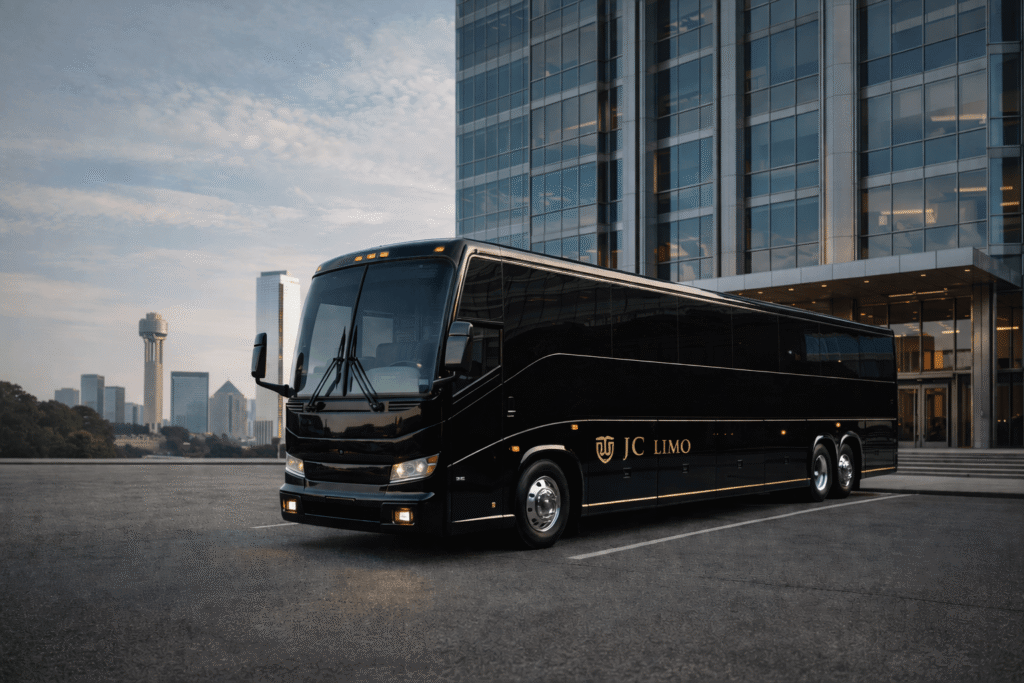
JC Limo operates three professional group vehicles across DFW:
• 56-passenger motor coach
• 47-passenger shuttle bus
• 31-passenger mini bus
That means we can serve everything from mid-size private groups to large conference and wedding programs with one organized transportation partner.
Why Choose JC Limo for Shuttle Bus Service in DFW
The city may change. The standard does not.
JC Limo helps groups across Dallas–Fort Worth move with less confusion, less stress, and a transportation plan that supports the event from the first pickup to the final drop-off.
Three Vehicle Sizes, One Company
You do not need separate vendors for different group sizes or program types. JC Limo coordinates the fleet internally.
Local City Coverage Across DFW
We serve Dallas, Fort Worth, Plano, Frisco, and the surrounding Metroplex with transportation plans tailored to the actual city and venue.
Professional Chauffeurs
Every driver is commercially licensed, background-checked, professionally presented, and trained for organized group transportation.
15-Minute Early Arrival Policy
Our chauffeurs arrive at least 15 minutes before scheduled boarding, so your group is not left waiting.
Fixed-Price Quotes
You receive a clear transportation proposal before booking, based on your route, event type, and group size.
One Contact, One Transportation Plan
From booking through the final drop-off, you deal with one transportation provider instead of managing multiple moving parts.
Full Metroplex Coverage
We operate across the major DFW service markets and the cities around them.
Not Sure Which DFW City Page Fits Your Event?
Start with the city where your event is happening most directly, or call our team and we will guide you.
Choose Your City
Each city page is built around the venues, traffic patterns, and event types specific to that market.
Dallas
DFW’s largest city and one of the busiest event markets in the Metroplex.
Dallas transportation often includes:
• Uptown weddings
• Downtown conference shuttles
• Deep Ellum event runs
• Kay Bailey Hutchison Convention Center loops
• corporate events and stadium transportation
Vehicles Available
Motor Coach • Shuttle Bus • Mini Bus
Top Event Types
Weddings • Conferences • Corporate events • Proms • Church groups • Stadium runs
Key Areas Served
Uptown • Downtown • Deep Ellum • Las Colinas • Lakewood • Preston Hollow • Market Center
Fort Worth
A city with its own event culture, venue style, and transportation rhythm.
Fort Worth transportation often includes:
• Sundance Square programs
• Cultural District weddings
• convention and rodeo event transportation
• church group transportation
• arena and Stockyards runs
Vehicles Available
Motor Coach • Shuttle Bus • Mini Bus
Top Event Types
Weddings • Convention shuttles • Corporate events • Church groups • Arena runs
Key Areas Served
Sundance Square • Cultural District • Stockyards • TCU area • Arlington • Mid-Cities
Plano
A major North Texas corporate and event market with strong cross-city transportation demand.
Plano transportation often includes:
• Legacy West corporate shuttles
• conference attendee loops
• wedding guest programs
• prom transportation
• airport and Dallas-bound corporate movement
Vehicles Available
Motor Coach • Shuttle Bus • Mini Bus
Top Event Types
Corporate shuttles • Conferences • Weddings • Proms • Church groups • Private events
Key Areas Served
Legacy West • Downtown Plano • Allen • McKinney • Richardson • Garland • Rockwall
Frisco
One of the fastest-growing event and group transportation markets in North Texas.
Frisco transportation often includes:
• The Star corporate programs
• Toyota Stadium group runs
• Frisco ISD prom transportation
• wedding guest shuttles
• North Collin County private and business events
Vehicles Available
Motor Coach • Shuttle Bus • Mini Bus
Top Event Types
Corporate events • Weddings • Proms • Church groups • Sports shuttles • Private events
Key Areas Served
Frisco Square • The Star • Toyota Stadium area • Little Elm • Prosper • Celina • McKinney
Need Help Choosing the Right City Page?
Full DFW Service Coverage
JC Limo’s fleet operates well beyond just the four primary city pages.
We regularly provide service throughout the broader Metroplex, including:
| County | Common Service Cities |
|---|---|
|
Dallas County Tarrant County Collin County Denton County |
Dallas, Irving, Garland, Mesquite, Grand Prairie, Carrollton, Farmers Branch Fort Worth, Arlington, Mansfield, Keller, Haltom City, North Richland Hills, Euless, Bedford Plano, Frisco, McKinney, Allen, Celina, Prosper, Anna, Wylie, Sachse, Rockwall Denton, Lewisville, Flower Mound, Little Elm, The Colony, Corinth, Grapevine, Southlake |
If your city is not listed, contact us. There is a strong chance we already serve it.
Which Bus Is Right for Your Group?
Every city page connects back to the same three professional JC Limo vehicles.
Here is the fastest way to choose by passenger count.
| Group Size | Bus | Why It Fits |
|---|---|---|
|
Up to 31 passengers 32–47 passengers 48–56 passengers Over 56 passengers |
Mini Bus Shuttle Bus Motor Coach Multi-Bus Program |
Best for mid-size groups and tighter venue access Most versatile option for weddings, conferences, and events Best for large groups needing comfort and maximum capacity Coordinated fleet service for larger programs |
If you are between sizes, our team can help recommend the best fit based on the route, venue, and event type.
Need Help Matching the Right Bus to Your Group?
What Every JC Limo Booking Includes
No matter which city your event is in, every JC Limo booking is supported by the same service standard.
Professional, Uniformed Chauffeurs
Drivers are commercially licensed, background-checked, and trained for organized passenger transportation.
Late-Model, Maintained Vehicles
Our vehicles operate on a structured maintenance schedule and are prepared for service before every run.
Commercial Liability Insurance
JC Limo maintains full commercial liability insurance, and certificates are available for venues, schools, hotels, and organizations when required.
15-Minute Early Arrival Standard
Our chauffeurs arrive early because your event should not be waiting on the bus.
One Transportation Contact
From booking through the final run, you work with one organized transportation team.
Right-Sized Vehicle Matching
We help match the vehicle to the real group size and program needs instead of overselling capacity or forcing an undersized setup.
Why Clients Across DFW Choose JC Limo
The Metroplex is large, but most group transportation clients want the same things:
• clear communication
• dependable timing
• the right vehicle
• a professional driver
• a transportation company that already understands the market
That is what JC Limo is built to provide.
DFW Shuttle Bus Service FAQ
Very likely yes. We serve cities across Dallas, Tarrant, Collin, and Denton counties, including many communities beyond the four main location pages.
All three JC Limo buses are available across the Dallas, Fort Worth, Plano, and Frisco markets, subject to booking date and availability.
Yes. Airport group transportation is available from Dallas, Fort Worth, Plano, Frisco, and surrounding areas.
Each page is tailored to the local city market, including specific venues, neighborhoods, search intent, and transportation patterns.
Share your venue address with us. We can help evaluate the right vehicle based on driveway, loading, and access conditions.
Base pricing is consistent by vehicle and service type, but route distance and program structure can affect the total quote.
Yes. Multi-city itineraries are common and can be built into one organized transportation plan.
Book Shuttle Bus Service Across Dallas–Fort Worth
JC Limo helps groups across the Metroplex travel together with less confusion, less stress, and a transportation plan that fits the city, the venue, and the event.
Professional vehicles.
Experienced chauffeurs.
One organized DFW transportation plan.