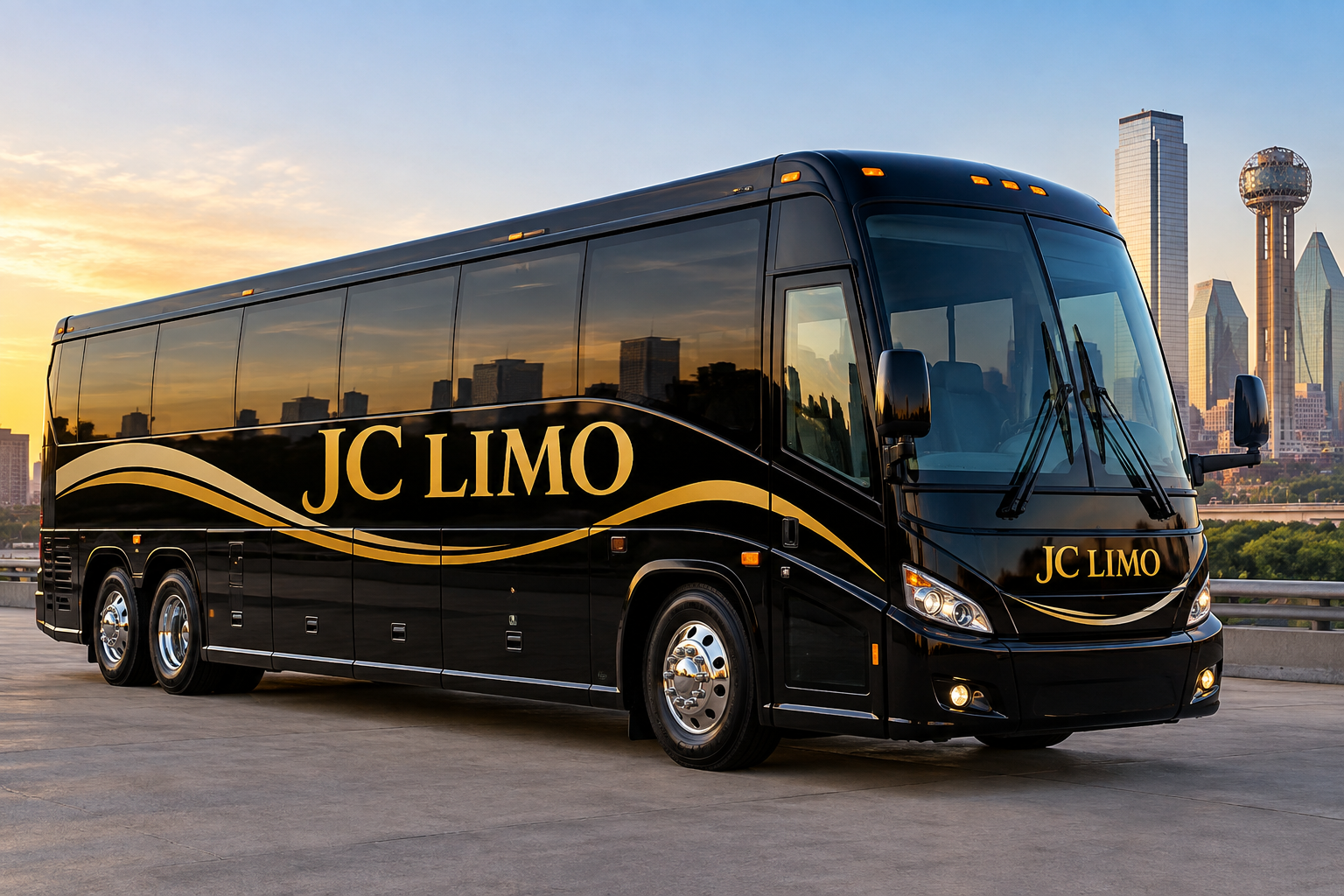
An early morning departure can make even a simple group trip feel complicated.
When one person needs to leave home at 4:30 a.m., the plan is usually manageable. But when 20, 30, 40, or more people need to meet at the same location, load their luggage, board transportation, and leave Dallas on schedule, every small delay can affect the entire day.
Someone oversleeps. Another passenger goes to the wrong pickup location. A rideshare cancels. Several cars arrive at different times. The group spends another fifteen minutes figuring out where everyone is.
Before the trip has really started, the schedule is already behind.
That is why early morning group transportation requires more planning than simply finding enough seats.
For groups traveling throughout Dallas, Fort Worth, and North Texas, professional bus and shuttle transportation can create a much more organized start to the day. Instead of coordinating separate vehicles, passengers can meet at an agreed pickup point and travel together under one transportation plan.
At JC LIMO, group transportation can be arranged around the schedule, passenger count, destination, luggage requirements, and overall itinerary.
Whether your group is catching an early flight, attending a morning conference, leaving for an out-of-town event, or beginning a full-day Texas trip, the right transportation plan can make those first few hours much easier.
Why Early Morning Group Travel Is Different
Group transportation at 5:00 a.m. is not the same as moving people at 2:00 p.m.
There is less room for improvisation.
If your group is traveling to an airport, there may be a flight that cannot wait. If you are traveling to a tournament, conference, school event, or corporate program, your arrival time may already be fixed.
The earlier the departure, the more important preparation becomes.
Imagine organizing transportation for 45 people from a Dallas hotel to DFW Airport.
If everyone books transportation independently, you may have more than a dozen separate rides happening at once. Some passengers may arrive early. Others may be waiting for their drivers. A few may accidentally choose the wrong terminal.
Now imagine putting the same group on one appropriately sized bus or shuttle.
Passengers meet at one location, luggage is loaded together, and the group leaves according to one schedule.
That difference matters.
Professional group transportation turns dozens of individual travel decisions into one coordinated movement.
Start With the Arrival Time, Not the Departure Time
One of the easiest mistakes in transportation planning is focusing only on when the group should leave.
Instead, begin with the time everyone must arrive.
Suppose your group has a morning program in Fort Worth beginning at 8:30 a.m.
You should not simply estimate the drive from Dallas and choose a departure time. You need to work backward.
Consider how much time passengers need to get off the bus. Think about parking and unloading conditions at the destination. Account for luggage or equipment. Build in additional time for traffic and unexpected delays.
Then determine when boarding should begin.
For larger groups, boarding itself takes time.
Forty passengers do not appear in their seats instantly. People need to check that they have their belongings, store bags, greet other members of the group, and settle in.
Building this time into the schedule can prevent an unnecessary rush before departure.
One Pickup Point Can Simplify the Entire Morning
For many groups, one of the best ways to make early transportation easier is to establish a clear central pickup location.
That could be a hotel, corporate office, church, school, event venue, or another location where passengers can gather safely.
Instead of asking everyone to arrange separate transportation across Dallas or Fort Worth, passengers know exactly where they need to be and when.
This is particularly useful for:
Corporate teams
Conference attendees
Church groups
Sports teams
Wedding parties
School and university groups
Community organizations
Tour groups
Families traveling together
Convention attendees
A central pickup point also makes communication easier.
Rather than asking, “Where is everyone?” organizers can focus on a single passenger list and departure schedule.
For a large group, that simplicity can be extremely valuable before sunrise.
When Multiple Pickup Points Are Necessary
Of course, one pickup location is not always practical.
Your passengers may be staying at different hotels around Dallas. A corporate group may have employees coming from different offices. An event may require pickups in both Dallas and Fort Worth.
In those situations, the route needs to be planned carefully.
Adding several stops without considering their order can turn a straightforward journey into a long morning.
For example, a shuttle collecting passengers from three hotels should follow a logical sequence based on the final destination and realistic travel conditions.
Each stop also needs a clear boarding time.
Passengers at the second hotel should not be told only that the bus will arrive “early in the morning.” They need an actual pickup time and instructions to be ready before the vehicle arrives.
Good transportation planning is often less about driving and more about eliminating uncertainty.
When passengers know where to be, when to be there, and what happens next, the trip becomes easier for everyone.
Early Airport Transportation for Groups
Airports are one of the biggest reasons groups need transportation early in the morning.
Dallas is served by major airports, including Dallas Fort Worth International Airport and Dallas Love Field, and many flights depart during the morning hours.
For an individual traveler, airport transportation is usually straightforward.
For a group, it can become much more complicated.
Different passengers may have multiple suitcases. Some may be unfamiliar with Dallas. Others may not know which terminal they need. If everyone travels separately, the organizer may spend the entire morning checking phones and asking whether people have arrived.
A dedicated JC LIMO bus or shuttle gives the group a shared transportation plan.
Everyone can meet at the designated location, board together, and travel toward the airport as one group.
When selecting the vehicle, however, planners should think beyond passenger capacity.
Luggage matters too.
A bus that technically seats the entire group may not be the right choice if every passenger is traveling with large suitcases or equipment.
The best transportation plan considers both people and belongings.
Corporate Groups With Early Schedules
Dallas and Fort Worth are major business destinations, and corporate schedules do not always begin at 9:00 a.m.
Teams may need transportation from hotels to conference centers before registration opens. Executives may have an early site visit. Employees may be traveling to another Texas city for a full-day program.
When business schedules are tight, transportation becomes part of the professional experience.
Imagine inviting 40 employees or clients to an event and telling everyone to arrange their own transportation.
Some arrive 30 minutes early. Others arrive five minutes late. Several people are trying to find parking while the first session is starting.
A coordinated group shuttle creates a different experience.
The group can leave together, arrive together, and begin the day with fewer transportation-related distractions.
It also allows employees and guests to use the travel time differently. Instead of concentrating on directions and parking, passengers can talk, prepare for the day, check messages, or simply relax before arrival.
Morning Transportation for Sports Teams and Groups
Sports transportation creates another set of challenges.
Teams frequently travel with much more than passengers.
There may be uniforms, equipment bags, coolers, medical supplies, coaching materials, and personal luggage.
If a tournament begins early, the group may need to depart Dallas or Fort Worth long before normal daytime activity begins.
Splitting players and equipment among personal vehicles can make organization difficult.
One car arrives without an equipment bag. Another player is delayed. Someone accidentally drives to the wrong entrance.
A properly planned bus transportation arrangement helps keep players, coaches, staff, and equipment moving under the same schedule.
That can be especially helpful when the destination is outside the immediate Dallas–Fort Worth area.
For longer trips across Texas, keeping the group together can make stops, arrivals, and communication much easier to manage.
Choosing the Right Bus or Shuttle
Not every group needs the largest bus available.
Vehicle selection should depend on the actual trip.
JC LIMO offers group transportation options designed for different passenger counts and transportation requirements.
A smaller group may be comfortable in a mini bus, while larger groups may require a higher-capacity shuttle or motor coach.
The number of passengers is the starting point, but planners should also consider:
Luggage: How many bags will passengers bring?
Trip length: Is this a short Dallas transfer or a longer journey across Texas?
Equipment: Is the group traveling with sports gear, event materials, presentation equipment, or other large items?
Stops: Will the vehicle travel directly to the destination or make several pickups?
Schedule: How early does the group need to depart?
Return transportation: Does the same group need transportation later that day?
Thinking through these details before booking helps match the transportation setup to the real needs of the trip.
Why Separate Cars Can Become a Problem
Using personal cars may initially seem easier, especially when everyone in the group lives around Dallas or Fort Worth.
But the larger the group becomes, the more variables are introduced.
Ten cars mean ten drivers.
Ten drivers mean ten different departure times, navigation decisions, parking experiences, and opportunities for delays.
Even when everyone receives the same address, they may not arrive together.
One person stops for fuel. Another takes a different highway. Someone misses an exit. Another cannot find parking near the destination.
None of these issues is particularly serious individually.
Together, they can disrupt the group schedule.
A bus or shuttle reduces many of those moving parts.
Instead of managing ten or twenty vehicles, the organizer has one primary transportation plan.
Communication the Night Before Matters
The best early morning transportation plans often begin the night before.
Passengers should receive simple, clear information.
Tell them the pickup address, boarding time, planned departure time, destination, and anything they need to know about luggage.
The distinction between boarding time and departure time is especially important.
If the bus is scheduled to leave at 5:30 a.m., passengers should not begin arriving at 5:30.
They should already be there and ready to board.
For large groups, organizers may want to establish a meeting time earlier than the actual departure.
That gives passengers enough time to check in, load their belongings, and solve minor issues without delaying the vehicle.
A smooth morning is often the result of good communication the evening before.
Plan the Return Trip Too
Early morning departures tend to receive most of the attention because everyone is focused on arriving on time.
But the return trip deserves the same level of planning.
After a full day of meetings, sports, sightseeing, events, or travel, passengers are often tired.
That is not the ideal time to start figuring out how everyone will get back to their hotel or original pickup point.
If the group is using transportation for the entire day, include the return plan from the beginning.
Confirm the pickup location.
Estimate when the event will finish.
Determine whether everyone will return together or whether some passengers have different schedules.
If the itinerary may change, make sure the transportation plan accounts for that possibility.
Organized transportation should support the whole trip, not only the first ride.
Traveling Beyond Dallas and Fort Worth
Group travel does not always stay inside the Metroplex.
Dallas can be the starting point for trips throughout Texas, whether groups are heading to another city, a retreat, a sporting event, a corporate program, or a private gathering.
Longer journeys make coordination even more important.
When multiple cars are involved, every additional mile creates more opportunity for the group to become separated.
One driver stops while another continues. Traffic affects different vehicles differently. People arrive at different times.
Traveling together on a dedicated bus can create a much more consistent experience.
The group shares the same route, schedule, stops, and arrival plan.
For organizers responsible for dozens of passengers, that can remove a significant amount of unnecessary coordination.
Make Transportation Part of the Itinerary
One of the most useful changes a group planner can make is to stop treating transportation as something that happens between activities.
Transportation is part of the itinerary.
If a conference begins at 9:00 a.m., the itinerary should not start at 9:00.
It begins when passengers meet for transportation.
The same applies to weddings, airport transfers, sporting events, corporate outings, church trips, conventions, and tours.
The experience begins at pickup.
A late or confusing departure affects everything that follows. A well-organized departure creates a calmer start and gives the schedule a better chance of staying on track.
That is why professional transportation planning should happen at the same time as venue bookings, hotel arrangements, flights, and event schedules.
Early Mornings Do Not Have to Feel Chaotic
Nobody loves setting an alarm for 4:00 a.m.
But early group transportation does not have to be stressful.
The key is reducing the number of decisions that need to happen in the morning.
Choose the pickup locations in advance.
Set clear boarding times.
Select a bus or shuttle that fits the group and its luggage.
Share the schedule with passengers.
Plan the route.
Confirm the destination.
Organize the return trip.
When those details are handled beforehand, passengers only need to do one thing: show up ready to travel.
That is a much easier way to begin a busy day.
Plan Your Dallas Fort Worth Group Transportation With JC LIMO
Whether your group is heading to the airport before sunrise, traveling to an early conference, starting a Texas road trip, attending a tournament, or moving between Dallas and Fort Worth, transportation can shape the entire experience.
JC LIMO provides professional group transportation for passengers throughout Dallas, Fort Worth, and the surrounding Texas communities, with bus and shuttle options for different group sizes and itineraries.
Instead of coordinating multiple vehicles and hoping everyone arrives on time, build one transportation plan around your group.
Because when the departure is early and the schedule matters, being organized from the first pickup can make the rest of the day much easier.

Related posts
 13Oct, 26
Dallas Group Transportation With Luggage and Equipment
 13Oct, 26
Dallas Group Transportation With Multiple Drop-Offs
 13Oct, 26
- October 13, 2026
- 0
- 10
