
Moving 40 people around Dallas is one transportation challenge.
Moving 40 people, 40 suitcases, carry-on bags, presentation materials, sports equipment, event supplies, and personal belongings is something completely different.
Group transportation is not only about the number of seats on a bus.
What passengers bring with them can change the type of vehicle needed, the time required for boarding, the amount of space available, and even how the itinerary should be organized.
This becomes especially important for groups traveling through Dallas–Fort Worth, Texas.
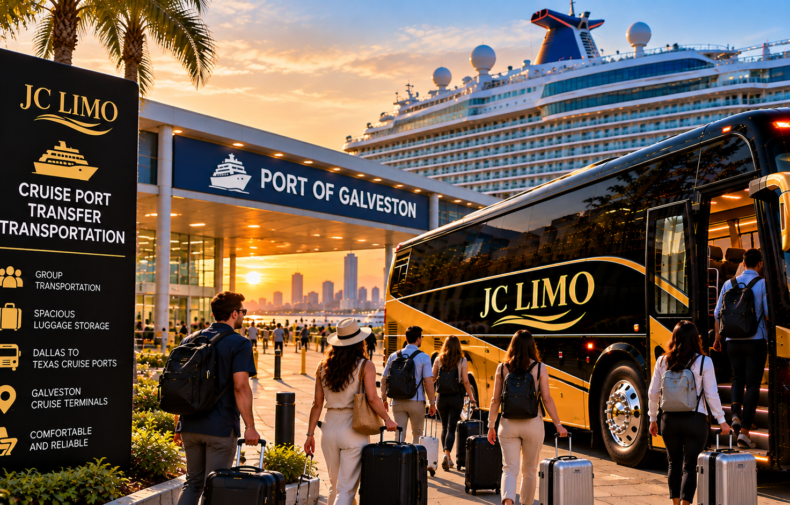
Airport groups may be arriving with luggage for an entire week. Corporate teams could have displays and presentation materials. Sports groups may travel with equipment. Event teams might carry boxes, signs, or promotional supplies. Families can arrive with strollers and several bags per person.
Without planning, a vehicle that appears large enough for the group may not be practical once everything else needs to travel too.
Professional Dallas group transportation helps organizers consider the complete travel requirement—not just the passenger count.
With the right JC LIMO bus or shuttle, groups can move through Dallas, Fort Worth, airports, hotels, events, and other North Texas destinations while keeping passengers and their belongings part of the same coordinated transportation plan.
Passenger Count Is Only the Beginning
When planning transportation, the first question is usually:
“How many people are traveling?”
That is important, but it should not be the only question.
The next question should be:
“What is everyone bringing?”
There is a major difference between transporting 30 local employees to a Dallas dinner and transporting 30 travelers from an airport to a hotel.
The employees may each have only a phone and small personal bag.
The airport passengers could each have a large suitcase, carry-on, backpack, and additional personal items.
The number of passengers is identical.
The transportation requirements are not.
That is why luggage should be discussed when arranging group bus transportation in Dallas.
Airport Groups Usually Have the Most Luggage
Airport transportation is one of the most obvious examples.
A group arriving at DFW for a multi-day trip may have dozens of checked bags.
Even a relatively small group can produce a large amount of luggage.
Imagine 35 passengers.
If every passenger has one checked suitcase and one carry-on bag, the group may be traveling with approximately 70 individual pieces.
Add backpacks, laptop bags, and personal items and the total increases again.
Trying to solve that problem with several small vehicles can quickly become complicated.
Some passengers fit.
Their luggage does not.
Another vehicle has available seats but no room for additional bags.
Someone ends up holding luggage inside the passenger area.
Planning the transportation capacity in advance avoids these problems.
Tell the Transportation Provider About Luggage Early
Do not wait until pickup day to mention that every passenger has two suitcases.
Transportation should be selected around the real requirements of the group.
When discussing a trip, organizers should provide an approximate idea of:
the number of passengers,
number of large suitcases,
number of carry-on bags,
special equipment,
oversized items,
and any unusual transportation requirements.
Exact numbers may not always be available months in advance.
An estimate is still useful.
The goal is to avoid surprises when the bus arrives.
Business Groups Carry More Than Suitcases
Corporate transportation often involves equipment that does not look like traditional luggage.
Employees may bring:
presentation cases,
product samples,
trade show materials,
printed documents,
laptops,
display equipment,
signage,
promotional products,
and branded materials.
If a company is attending a trade show or conference in Dallas, the equipment requirements may be significant.
This should be considered when planning transportation from the airport, hotel, convention venue, or corporate office.
A JC LIMO corporate shuttle can transport the group as part of a coordinated itinerary, but planners should identify what needs to travel with the passengers.
Trade Show Groups Need Extra Planning
Trade shows are particularly demanding because companies often travel with more materials than they expect.
Even when large exhibition equipment is shipped separately, employees may still carry smaller display items, samples, brochures, electronics, giveaways, and personal luggage.
Transportation may need to connect:
the airport,
hotel,
convention center,
client dinners,
off-site meetings,
and other business events.
If materials need to travel with the team throughout the day, vehicle space becomes even more important.
Organizers should also consider whether items will remain with the group or be unloaded at the venue.
That affects the rest of the day’s transportation plan.
Sports Groups Have Different Equipment Needs
Sports teams and athletic groups can create another type of transportation challenge.
Depending on the activity, passengers may travel with large bags, uniforms, training gear, balls, protective equipment, or other sporting items.
A group of athletes may therefore require more transportation space than another group with the same passenger count.
For teams traveling across Dallas, Fort Worth, and North Texas, the itinerary may also include several locations.
Airport.
Hotel.
Practice facility.
Competition venue.
Restaurant.
Back to the hotel.
A dedicated bus or shuttle can keep the team together, but equipment needs should be included from the beginning.
School and Student Groups Need Organized Storage
Student groups often travel with backpacks, overnight bags, instruments, sports gear, or educational materials.
When dozens of students are involved, keeping belongings organized becomes important.
One advantage of scheduled group transportation is that passengers can follow a consistent loading and unloading process.
Instead of bags being spread across many cars, the group has one central transportation plan.
Teachers, coaches, and group leaders can also supervise loading more easily when everyone is traveling together.
This can be useful for school trips, competitions, campus visits, performances, and educational tours around Dallas–Fort Worth.
Musicians and Performance Groups Require Special Consideration
Performance groups may have particularly unusual transportation needs.
Musicians can travel with instruments.
Dance groups may carry costumes.
Theater groups may have props.
Production teams may bring technical equipment.
These items can vary significantly in size and handling requirements.
For these groups, transportation should never be booked based only on the number of people.
Organizers should discuss the equipment in advance and determine whether the planned vehicle is suitable.
Large or delicate items may require additional arrangements.
Wedding Groups Bring More Than Guests
Wedding transportation is usually discussed in terms of moving guests between hotels, ceremonies, and receptions.
But members of the wedding party may also have additional belongings.
Garment bags.
Decorations.
Welcome materials.
Personal luggage.
Photography equipment.
Gifts.
Emergency supplies.
If the wedding party is traveling directly from a hotel to a venue with everything they need for the day, those items become part of the transportation requirement.
A Dallas wedding shuttle should be planned around the actual travel needs of the passengers rather than just the guest count.
Families Can Have Significant Luggage Too
Family groups are another example.
A family reunion may include passengers of many different ages.
Parents may bring strollers.
Young children may have extra bags.
Older relatives may travel with personal mobility items.
Out-of-town guests may arrive with several days of luggage.
When the group is large, these items add up quickly.
Planning enough space makes boarding easier and creates a more comfortable travel experience for everyone.
Consider the Entire Itinerary
Luggage does not only matter during the airport transfer.
Ask where the belongings will be throughout the trip.
If passengers travel directly from DFW Airport to a hotel, the answer is simple.
The luggage goes to the hotel.
But what if hotel rooms are not ready?
What if the group travels directly from the airport to a meeting?
What if the final day includes hotel checkout in the morning but the flight does not depart until evening?
Now the group may need to travel with its luggage for part of the itinerary.
That changes the transportation requirements.
Hotel Check-In and Check-Out Can Create Luggage Gaps
Hotels operate on check-in and check-out schedules that may not perfectly match flight times.
A group could arrive in Dallas at 10:00 AM while hotel rooms are not ready until later.
Another group may need to check out in the morning but have an evening flight.
In both cases, luggage needs a plan.
Depending on the itinerary, bags may be stored at the hotel.
Or passengers may travel with their belongings to another destination.
The important thing is deciding before the day arrives.
Transportation should not become the place where luggage is unexpectedly stored because no other plan exists.
Loading Takes Time
Large amounts of luggage affect the schedule too.
Forty passengers without luggage can board relatively quickly.
Forty passengers with multiple suitcases take longer.
Bags need to be organized.
Passengers may need to identify their belongings.
Equipment may require special handling.
The same process happens again when unloading.
If the itinerary has several stops, these minutes can accumulate.
Organizers should build realistic loading time into the transportation schedule.
For airport departures, this is especially important.
Labeling Bags Can Help Large Groups
Simple luggage identification can make unloading easier.
If a group is traveling to several hotels, bags can become difficult to organize.
One solution is to use luggage tags that identify the passenger or destination.
For example:
Dallas Hotel A
Dallas Hotel B
Fort Worth Hotel
This can help when belongings are being unloaded at different stops.
The same approach can work for tour groups moving between hotels during a multi-day Texas trip.
Avoid Unnecessary Unloading
If the group has several stops during the day, consider whether luggage needs to be removed at each one.
Repeatedly unloading and reloading dozens of bags can consume time and create opportunities for items to be misplaced.
When appropriate and compatible with the transportation arrangements, organizers should plan the itinerary so luggage is handled as efficiently as possible.
For example, traveling from the airport to the hotel before beginning other activities may simplify the rest of the day.
The best approach depends on the trip.
Multiple Hotels Make Luggage More Complicated
If passengers are staying at several hotels, belongings need to reach the correct property.
Imagine one bus carrying passengers for three hotels.
When the vehicle reaches the first stop, organizers need to know which luggage belongs to the passengers getting off.
If bags are not organized, everyone may need to search through dozens of suitcases.
That slows the route.
Grouping or labeling luggage by destination can make multi-hotel transportation much more efficient.
Fort Worth Trips Need the Same Planning
Groups traveling from Dallas to Fort Worth, Texas should consider luggage in exactly the same way.
Perhaps the group lands in Dallas but stays in Fort Worth.
Maybe the trip begins in Dallas and moves to a Fort Worth hotel later.
A tour group could spend several nights in each city.
Whenever passengers change accommodation locations, belongings become part of the transportation plan.
A Dallas–Fort Worth bus can keep passengers and luggage together during these transitions when the vehicle and itinerary are planned appropriately.
Don’t Block Passenger Space With Bags
When transportation is not properly planned, luggage can begin taking over areas intended for passengers.
That creates an uncomfortable travel experience.
People should not need to spend a long Dallas–Fort Worth journey surrounded by piles of suitcases because the luggage requirement was underestimated.
Selecting an appropriate transportation option from the beginning helps protect passenger comfort.
This is especially important on longer trips around Texas.
Plan for Equipment Pickup and Drop-Off
Some groups need to collect or deliver equipment during the trip.
A corporate team may need to pick up event materials.
A sports team might collect gear from a facility.
A production crew could load additional equipment at a venue.
These movements should be included in the schedule.
Loading 20 boxes is not a two-minute stop.
The transportation itinerary should account for the additional time and space required.
Keep Valuable Items With Passengers When Appropriate
Not every item should automatically be treated as ordinary luggage.
Passengers may carry laptops, documents, electronics, medication, identification, or other important personal belongings.

Related posts
 13Oct, 26
Dallas Group Transportation With Luggage and Equipment
 13Oct, 26
Dallas Group Transportation With Multiple Drop-Offs
 13Oct, 26
- October 13, 2026
- 0
- 10
