Planning transportation for one person is usually straightforward. You choose where you are going, decide when to leave, and get on the road.
Planning transportation for an entire group across Dallas and Fort Worth is different.
A group itinerary can include hotel pickups, airport arrivals, meetings, restaurants, event venues, sightseeing stops, and a final return trip—all within the same day. Add Dallas–Fort Worth traffic, different pickup locations, luggage, changing schedules, and dozens of people who need to stay together, and transportation quickly becomes one of the most important parts of the plan.
This is where organized group transportation can make a significant difference.
Instead of asking every passenger to arrange an individual ride, a dedicated bus or shuttle gives the group one coordinated transportation plan.
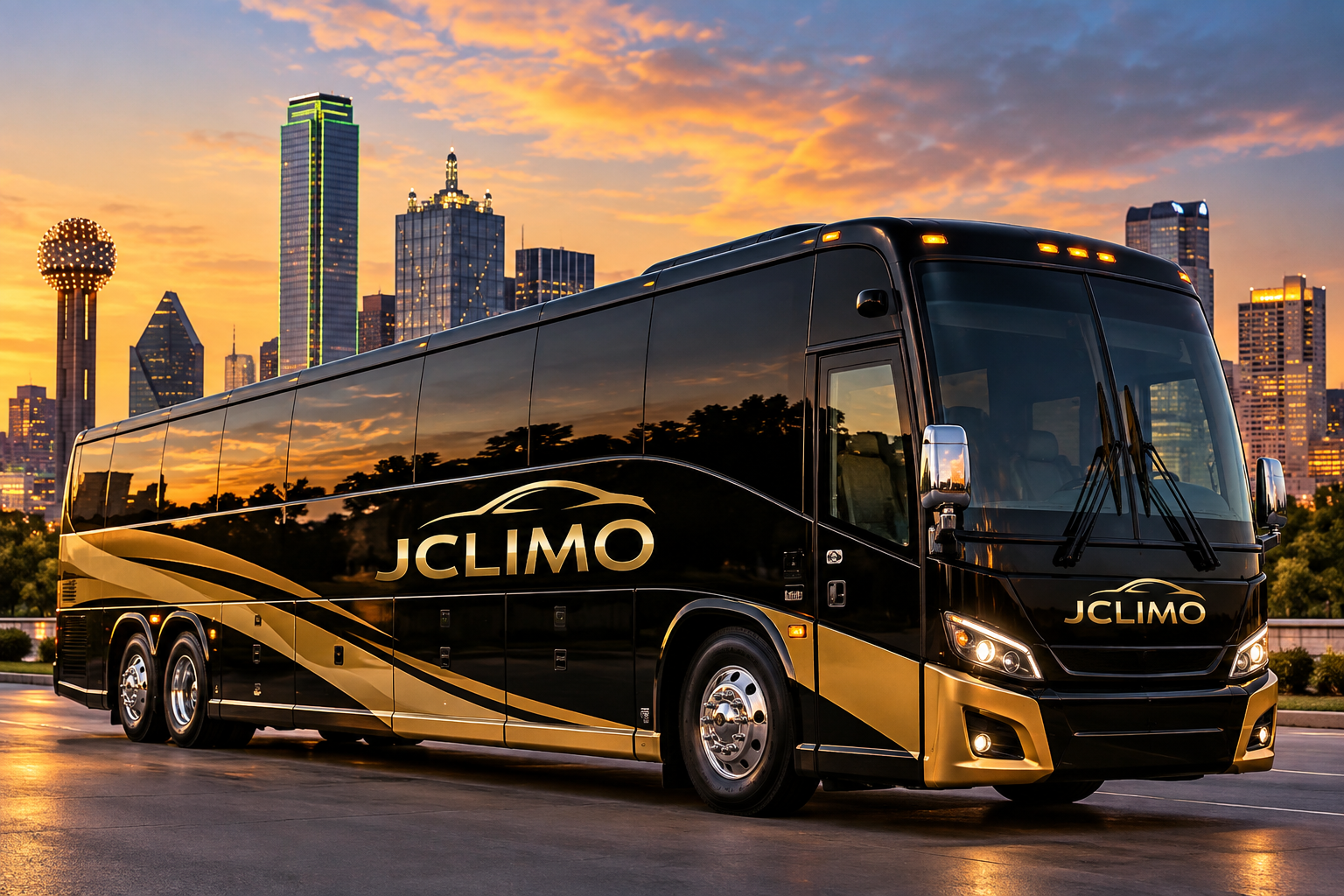
JC LIMO provides group transportation throughout Dallas, Fort Worth, and surrounding Texas communities for itineraries that require more than a simple pickup and drop-off.
Whether your group has three stops or an entire day of scheduled activities, the goal is simple: keep the transportation working around the itinerary instead of forcing the itinerary to work around transportation.
Why Complex Group Trips Need More Planning
Many group trips look easy on paper.
For example:
Hotel → Meeting → Lunch → Event → Dinner → Hotel
But each arrow represents another transportation decision.
What time should the group leave?
Where can the bus load passengers?
How much time should be allowed for Dallas traffic?
Will everyone be ready at the same time?
How long will the vehicle wait?
What happens if the meeting runs late?
What if the next destination is in Fort Worth instead of Dallas?
These questions become even more important when the group is traveling on a fixed schedule.
A 15-minute transportation delay early in the day can affect lunch reservations, conference sessions, event entrances, appointments, and every other activity that follows.
Good group transportation planning considers the entire day—not just individual rides.
One Transportation Plan Instead of Multiple Rides
One of the biggest challenges with group travel is fragmentation.
Imagine a group of employees attending a corporate program in Dallas.
Some people order rideshares. Others drive rental cars. A few travel with colleagues. Another group leaves the hotel late.
Everyone may eventually arrive, but they are no longer moving according to one schedule.
That makes the organizer responsible for tracking multiple vehicles and answering questions such as:
“Where is everyone?”
“Did the other group leave?”
“Who has the address?”
“Which entrance are we using?”
“Are we waiting for anyone?”
A dedicated JC LIMO bus or shuttle creates a central transportation plan for the group.
Passengers know the pickup point.
They know the departure time.
They know where they are going next.
Instead of coordinating multiple individual rides throughout the day, the organizer can build transportation directly into the itinerary.
That becomes especially useful when the schedule includes several destinations.
Multi-Stop Transportation Across Dallas–Fort Worth
Dallas–Fort Worth covers a large geographic area.
A group could stay near DFW Airport, attend a meeting in Irving, visit an office in Plano, have dinner in Dallas, and return to a hotel near the airport.
Another itinerary might begin in Fort Worth, continue to Arlington for an event, and end in downtown Dallas.
Those trips are not unusual in North Texas.
But distances between destinations mean transportation time has to be treated as part of the schedule.
JC LIMO provides transportation across Dallas, Fort Worth, Arlington, Plano, Frisco, Irving, Grapevine, and other communities throughout the DFW Metroplex.
For groups moving between several cities, using the same transportation arrangement throughout the program can make the entire day easier to manage.
Instead of finding a new ride after every activity, the bus or shuttle becomes part of the itinerary.
Building Transportation Around the Schedule
A good group transportation plan begins with the itinerary.
Before the trip, organizers should identify:
Pickup locations
Passenger counts
Departure times
Destination addresses
Planned stops
Approximate time at each location
Final drop-off location
Luggage or equipment requirements
Important deadlines during the day
For example, if a corporate group needs to arrive at a Dallas conference by 8:30 a.m., the transportation plan should work backward from that deadline.
The pickup time needs to account for boarding, traffic, distance, and arrival procedures.
The same thinking applies throughout the day.
If lunch ends at 1:00 p.m. and the next meeting begins at 1:45 p.m., transportation between those locations should already be part of the plan.
This is one reason organized transportation is valuable for groups with busy schedules.
Transportation stops being an afterthought and becomes part of the event logistics.
Corporate Groups With Full-Day Itineraries
Business travel is one of the clearest examples of complex group transportation.
A company may bring employees, executives, customers, or partners to Dallas for several days.
Their schedule might include:
Airport pickup
Hotel transfer
Morning conference
Office visit
Client lunch
Afternoon presentation
Team activity
Business dinner
Hotel return
Trying to arrange each trip independently creates unnecessary coordination.
A scheduled bus or shuttle can keep the group moving according to the company’s program.
It can also make the experience easier for visitors who are unfamiliar with Dallas or Fort Worth.
Instead of asking guests to navigate an unfamiliar city, search for parking, or repeatedly enter destinations into an app, the transportation is already organized.
They can focus on the meeting, conference, or event rather than the road between locations.
Transportation for Conferences and Trade Shows
Large conferences often create another challenge: everyone may be traveling between the same few places, but not always at exactly the same time.
A company could have employees staying at one or more hotels while attending a convention in downtown Dallas.
The morning may require transportation from the hotel to the venue.
Later, the group might need transportation to a private dinner or networking event.
At the end of the evening, they need a return trip.
Shuttles can create a more organized connection between those destinations.
For larger programs, transportation can also be planned around different departure windows or multiple pickup points.
The important part is having the transportation plan established before attendees begin moving.
When Groups Arrive Through DFW Airport
Airport transportation can add another layer to a complex itinerary.
Dallas/Fort Worth International Airport serves travelers arriving from different cities and on different flights.
If a group is meeting in Dallas for an event, passengers may not all arrive together.
Some could land early in the morning while others arrive later in the day.
An organized airport transportation plan can coordinate those arrivals with the rest of the schedule.
Depending on the itinerary, passengers might travel directly to a hotel, meeting location, convention venue, or another destination.
For groups carrying luggage, equipment, presentation materials, or event supplies, choosing suitable transportation also becomes important.
The goal is not simply to leave the airport.
It is to make the airport transfer connect smoothly with everything that comes next.
Keeping Groups Together Between Stops
One of the biggest benefits of using a bus or shuttle is simple: the group can travel together.
That matters more than it may seem.
When passengers leave a venue in separate vehicles, they may arrive at the next location at different times.
One driver takes a different route.
Someone stops for coffee.
Another passenger enters the wrong address.
A rideshare arrives late.
Someone struggles to find the correct entrance.
With enough vehicles, small differences become bigger coordination problems.
Group transportation reduces those variables.
Everyone boards from the same location and travels toward the same destination.
For event planners, tour leaders, business managers, schools, organizations, and other groups, that can make the day easier to control.
Planning for Dallas and Fort Worth Traffic
Traffic is an unavoidable part of transportation in a major metropolitan area.
Dallas–Fort Worth has busy highways, rush-hour congestion, construction, sporting events, conventions, concerts, and other activities that can affect travel times.
That means a schedule should not be based only on the distance shown on a map.
A route that appears manageable under normal conditions may require more time during peak periods.
This becomes especially important when the group has a fixed arrival deadline.
If passengers need to reach an event at a specific time, transportation planning should include enough flexibility to avoid turning every small delay into a problem.
JC LIMO serves routes throughout the DFW area, allowing group transportation to be planned around the realities of traveling across North Texas.
Transportation for Groups With Multiple Hotels
Some events involve attendees staying at several hotels.
This often happens during weddings, conventions, corporate meetings, sports programs, and large private events.
Instead of expecting guests to find their own transportation, organizers can establish designated pickup points.
A shuttle might collect passengers from one hotel, continue to another property, and then travel to the venue.
After the event, the route can operate in reverse.
This approach helps create a clear transportation structure for guests.
It also reduces the number of individual vehicles arriving at the destination.
For venues with limited parking or complicated access, that can be particularly useful.
Group Transportation Beyond Dallas
Not every group trip stays inside Dallas.
Texas travel can involve longer distances and destinations outside the immediate Metroplex.
A group may begin in Dallas and travel to another city for a corporate retreat, private event, tour, competition, conference, or day trip.
For these journeys, keeping the group in one vehicle can simplify the travel experience.
Instead of coordinating a convoy of cars, the group can board together and continue toward the destination.
Longer trips also make comfort and planning more important.
Departure times, planned stops, luggage, return schedules, and the overall length of the program should all be considered before the trip begins.
What Happens When the Schedule Changes?
Even the most carefully planned itinerary can change.
A meeting runs longer than expected.
Dinner ends early.
A flight arrives late.
An event changes its ending time.
Weather affects the schedule.
One destination is replaced with another.
Group transportation needs enough structure to keep the day organized while still allowing planners to respond when necessary.
Having a central transportation provider can make communication easier.
Instead of trying to update several drivers or asking every passenger to rearrange an individual ride, the organizer has one transportation plan to manage.
That becomes increasingly valuable as the number of passengers and stops increases.
Bus and Shuttle Transportation for Different Groups
Complex itineraries are not limited to corporate travelers.
Many types of groups can benefit from coordinated transportation in Dallas and Fort Worth.
Wedding guests may travel between hotels, ceremonies, receptions, and after-parties.
Church groups may have several stops during a retreat or day trip.
Schools and organizations may travel between campuses, venues, activities, and hotels.
Tour groups may spend an entire day visiting attractions across North Texas.
Families may need transportation for reunions, celebrations, or large gatherings.
Event teams may move staff between hotels, venues, and staging locations.
Each itinerary is different.
The transportation plan should reflect those differences.
Why the Right Vehicle Matters
Choosing transportation is not only about finding a vehicle with enough seats.
The itinerary matters too.
Passenger count, luggage, trip duration, number of stops, pickup locations, and destination access can all affect which type of vehicle makes sense.
A smaller group may need a shuttle or mini bus, while a larger group may require a motor coach.
For programs involving several vehicles, timing and route coordination become even more important.
The best transportation setup is the one that fits the actual trip rather than forcing the group into a generic solution.
Make Transportation Part of the Itinerary
The easiest time to solve transportation problems is before the trip begins.
When organizers plan the bus or shuttle alongside the event schedule, they can identify potential issues early.
Is there enough travel time between locations?
Where will passengers board?
Does the venue have a designated loading area?
Are there multiple pickup points?
Will the group have luggage?
What time does everyone need to be back?
Does the trip cross Dallas, Fort Worth, or several surrounding Texas cities?
Answering these questions early creates a more realistic itinerary.
And a realistic itinerary usually creates a better experience for everyone involved.
Plan Dallas–Fort Worth Group Transportation With JC LIMO
Complex group travel does not have to feel complicated.
The key is creating one transportation plan that connects the people, locations, and schedule.
JC LIMO provides buses and shuttles for groups traveling throughout Dallas, Fort Worth, and the wider North Texas area.
From airport arrivals and corporate meetings to events, multi-stop programs, hotel transfers, and longer Texas trips, transportation can be organized around the itinerary your group actually needs.

Related posts
 13Oct, 26
Dallas Group Transportation With Luggage and Equipment
 13Oct, 26
Dallas Group Transportation With Multiple Drop-Offs
 13Oct, 26
- October 13, 2026
- 0
- 10
